
Are you feeling thirsty in Japan but not sure how to ask for water? Don’t worry! There’s one Japanese word you’ll definitely want to keep in your back pocket “the Japanese word for water, mizu (水)”. It might seem simple, but knowing how to say mizu can make your travel experience smoother, friendlier, and even more enjoyable. In this article, we’ll explore how to use mizu in everyday situations, break down different ways to ask for it politely or casually, and share some cultural insights along the way. So keep reading—even intermediate learners might discover something new!
1. The Basic Japanese Word for Water: 水 (Mizu)
The most common Japanese word for water is:
- 水 (mizu) – “water” (cold or room temperature)
Pronunciation: mi-zoo
Whether you’re dining at a restaurant, stopping by a vending machine, or asking for a glass of water in someone’s home, mizu is the go-to word. It’s one of the first words Japanese learners pick up because of how useful it is.
2. Hot Water Has a Different Word: お湯 (Oyu)
Interestingly, hot water isn’t called atsui mizu (“hot water”). Instead, the proper term is:
- お湯 (oyu) – “hot water”
Pronunciation: oh-you
You’ll hear oyu often at onsens (hot springs), when heating water in kettles, or when ordering tea. In casual settings, someone might even ask:
「お湯、飲みますか?」 (Oyu, nomimasu ka?) – “Would you like some hot water?”
3. How to Ask for Water in Japanese
Here are some common phrases for asking for water:
In casual situations with friends:
4. What to Expect When You Ask for Water in Japan
In most restaurants, water is served automatically—usually cold and very clean, often with ice. Refills are free, and it’s uncommon to be charged for water.
However, in traditional or rural establishments, you might receive hot tea instead of water. Don’t be surprised—it’s a common gesture of hospitality. Bottled water is also readily available at vending machines and convenience stores.
5. Other Water-Related Words You Might Hear
Here are some helpful related terms:
These are handy if you’re staying in a guesthouse or using household appliances.
6. Cultural Tips About Drinking Water in Japan
Tap water in Japan is safe to drink—but personally, I find the taste a bit off. I usually buy 1.8L bottles from supermarkets or convenience stores—they’re cheap and taste better!
In homes or ryokan (Japanese inns), you might be offered barley tea instead of water. Unlike some Western countries, bottled sparkling water is uncommon, and people rarely carry water bottles unless it’s hot or they’re outdoors.
Want to dive deeper into Japan’s water culture and history? [Click here!]
7. How to Ask for Water Without Ice
Water in Japan usually comes with ice by default. If you’d prefer it without, just say:
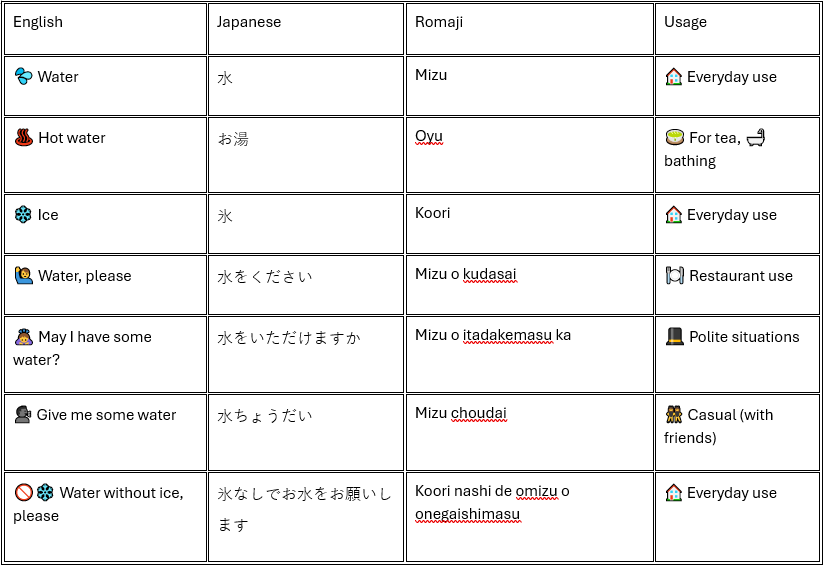
8. Cheat Sheet: Common Water Phrases
| English | Japanese | Romaji | Usage |
| Water | 水 | Mizu | Everyday use |
| Hot water | お湯 | Oyu | For tea, bathing |
| Ice | 氷 | Koori | Everyday use |
| Water, please | 水をください | Mizu o kudasai | Restaurant use |
| May I have some water? | 水をいただけますか | Mizu o itadakemasu ka? | Polite situations |
| Give me some water | 水ちょうだい | Mizu choudai | Casual (with friends) |
| Water without ice, please | 氷なしでお水をお願いします | Koori nashi de omizu o onegaishimasu | Everyday use |
Conclusion
Whether you’re in Tokyo, Kyoto, or a quiet countryside town, knowing how to say water in Japanese is more helpful than you’d think. In fact, mizu (水) is one of those basic words in Japanese that you’ll find yourself using everyday Especially during the hot summer months when staying hydrated is a must. It’s also one of the Japanese common words that can boost your confidence and help you connect with locals in a polite and respectful way. So next time you’re thirsty in Japan, just say it with confidence,
「水をください!」 (Mizu o kudasai!)